 Consumer
Penmark
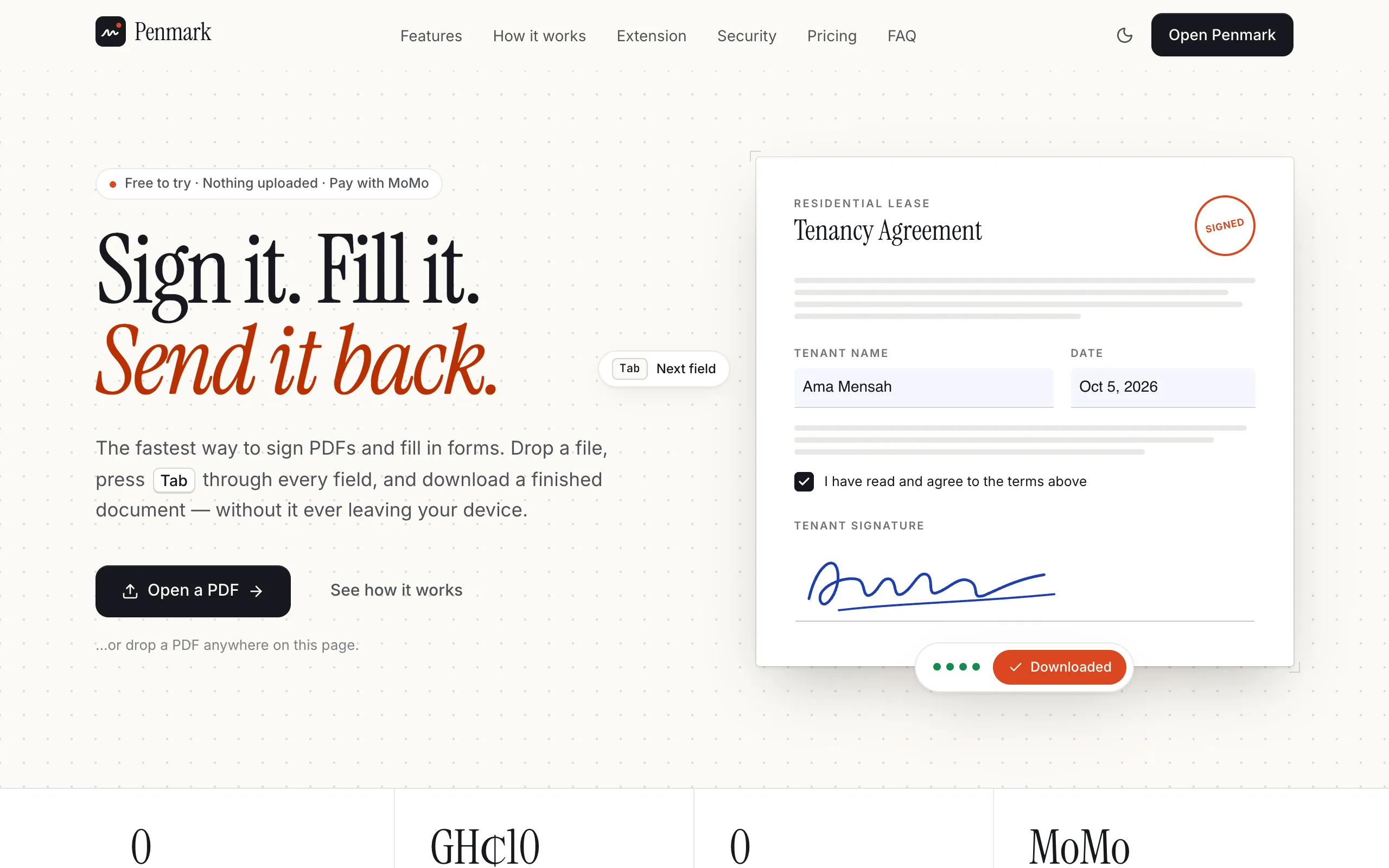
2026 — presentSign PDFs and fill forms in the browser, without uploading the file
LiveTypeScriptNext.js 16React 19+10Open
A barbershop operating system designed around the walk-in queue and mobile money
Not a client build — a bet, worked out far enough to look at. The category is crowded with capable products, so the interesting question was not whether a booking app could be built but whether there was an unclaimed position in it. The prototype exists to make that position concrete: a marketing site that argues it, a three-step onboarding that prices it, and the in-shop interface it would have to deliver.
Reading the reviews of seven established products in the category, the same grievances repeat, and all three are pricing decisions rather than feature gaps:
Most booking products model appointments and treat walk-ins as an exception. In a barbershop the queue is the shop: people arrive, wait, and are seen in an order everyone in the room can see. So the queue is first-class here — self-join by QR code, live wait estimates, a board that can go on the wall — and a booking is a reservation inside the queue rather than a separate system running alongside it.
Checkout follows the same logic. Services, retail and tip land on one ticket, split across payment methods if needed, with the rebook prompt on the paid screen while the client is still in the chair.
The interface, end to end, running on a mock data store. There is no backend, no payment integration and no subscriber — the prices in the onboarding flow are a proposal, not something anyone has been charged. It is here as design and positioning work that reached a testable state and stopped, not as a product.
ConsumerSign PDFs and fill forms in the browser, without uploading the file
An AI secretary and back office for small businesses, multi-tenant from the first row
A church website with the membership admin a Ghanaian congregation actually needs